
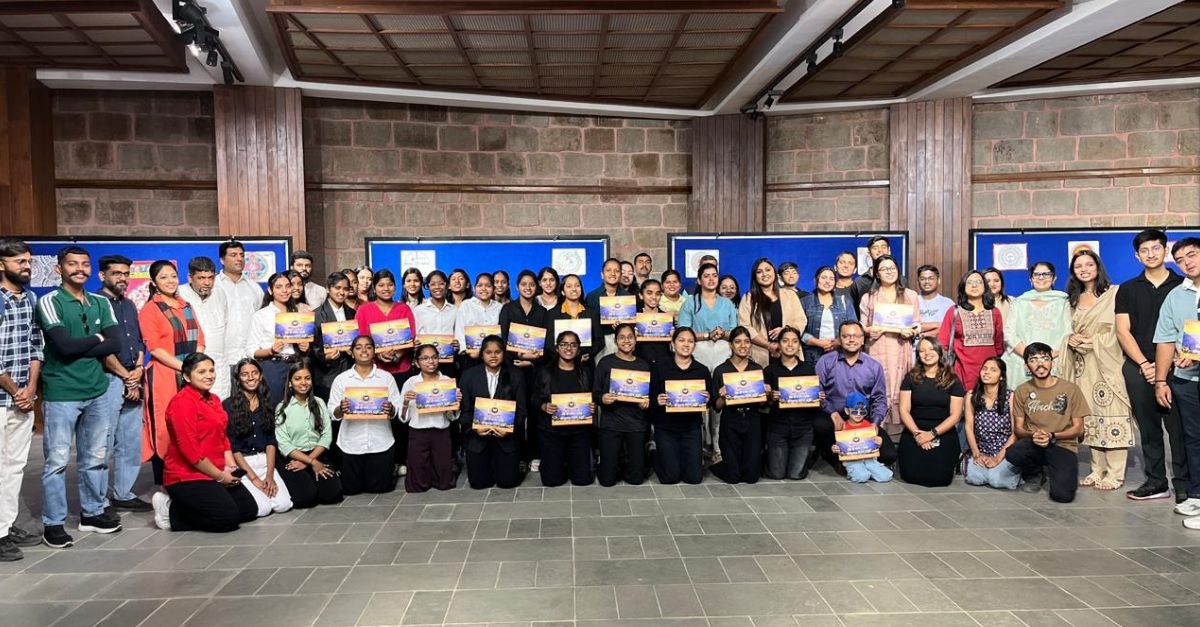
Surat, March 22: A unique and thought-provoking Mandala Art Exhibition held at Surat Fort brought together young artists who used their creativity to raise a strong and meaningful voice against corruption. The event stood out not only as an artistic showcase but also as a platform for social awareness, where art became a medium of resistance, reflection, and reform. Organized by Adabi Duniya Foundation in collaboration with Operation Zero Bribe, the exhibition featured nearly 50 intricate mandala art designs, each conveying a powerful narrative about the impact of corruption on society.
Mandala art, known for its detailed patterns and symbolic depth, was used innovatively by participants to depict themes such as transparency, justice, accountability, and the consequences of unethical practices. The circular nature of mandalas symbolized continuity and the interconnectedness of society, reminding viewers that corruption affects every layer of life and that collective action is essential to break this cycle. Each artwork reflected not only the technical skills of the artists but also their awareness, sensitivity, and commitment toward building a corruption-free society.
The program commenced with a warm welcome address by Habib Kinkhabwala, who highlighted the significance of engaging youth in social issues through creative platforms. He emphasized that art has the power to inspire change and provoke thought in ways that traditional discussions often cannot. His address set the tone for an event that was both intellectually engaging and emotionally resonant.
Adding depth to the event, ACB PI Mr. K. J. Dhaduke shared his insights on the ground realities of corruption and the role of law enforcement agencies in tackling it. He encouraged citizens, especially young individuals, to actively participate in reporting and resisting corrupt practices. Dr. Vrunda Bhatt also addressed the gathering, focusing on the importance of ethics in journalism and the responsibility of media professionals in shaping public opinion. She stressed that honest and fearless journalism is a crucial pillar in the fight against corruption, as it brings transparency and accountability to the forefront.
One of the most captivating highlights of the event was a mime performance presented by the team of Adbi Duniya. Directed by Kajal Chaudhary, the mime act portrayed the silent yet pervasive nature of corruption in everyday life. Without the use of words, the performers effectively communicated the emotional and societal consequences of dishonest practices, leaving a lasting impression on the audience. The performance was widely appreciated for its creativity, clarity, and impact.

The event also featured an engaging panel discussion moderated by Harshit Hemnani. The panel included distinguished speakers such as Satyen R. Nayak, Prasanna Bhatt, and Mihir Pathak, who shared their perspectives on the role of awareness, education, and responsible journalism in combating corruption. The discussion highlighted the need for a proactive approach, where citizens are not just passive observers but active participants in ensuring transparency and accountability. The speakers emphasized that while government efforts are important, true change can only come when individuals take responsibility and stand against unethical practices in their daily lives.
Throughout the exhibition, visitors were seen engaging deeply with the artworks, interpreting the themes, and discussing their relevance in today’s society. The event successfully created a space for dialogue, encouraging people to think critically about corruption and its far-reaching consequences. It also inspired many young attendees to consider how they can contribute to positive change in their own capacities.
The exhibition saw enthusiastic participation from a diverse group of talented artists, including Suman Mantu Sharma, Vidhya Parmar, Sunayana Banerjee, Sadhana Soni, Aditya Raj, Nikita Sen, Ankita Pandey, Komal Soni, Dhanashree Kedar, Gunjan Patel, Shreya Pandey, Geeta Gurjar, Aniruddh Dubey, Ranjani Prasad, Nishita Patel, Ranjan Singh, Yaksh Patel, Surbhi Giri, Khushi Sharma, Diksha Jaishwal, Ranjana Yadav, Riju Ray, Ishmita Mishra, Priyanka Sharma, Janhvi Singh, Munni Karmakar, Radhika Singh, Shrishti Sen, Ratan Parashar, Prachi Shakya, and Aishwarya Singh. Their collective efforts not only showcased artistic excellence but also demonstrated a shared commitment to social responsibility.
In conclusion, the Mandala Art Exhibition at Surat Fort was more than just an art event—it was a movement that combined creativity with conscience. By using art as a tool for advocacy, the organizers and participants successfully highlighted the urgent need to address corruption and inspired the community to take a stand. Such initiatives play a crucial role in shaping a more aware, responsible, and ethically driven society, proving that when art meets purpose, it can truly become a catalyst for change.